She Kept Washing Her Hands… Then I Learned She Was Writing to the Enemy
War changes people in quiet ways before it destroys them in loud ones. At Fort Mercy, where blood, dust, and fear lived side by side, I thought I knew my friend Rose better than anyone. I was wrong—and the secret she carried in her apron nearly cost us everything.
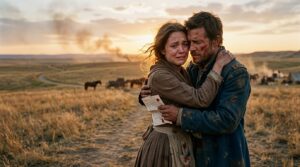
A Strange Little Habit
Let me tell you something I did not say out loud for a long time.
It started as a small thing about my friend, Rose. Just a little habit. The kind you notice, then laugh about inside and tell yourself maybe it is normal. We were both nurses at Fort Mercy, out on the dry edge of the Wild West. Dust in our hair. Blood on our sleeves. Men groaning in tents like the ground was swallowing them. In that place, everyone had strange habits.
So when Rose began doing this thing, I tried to ignore it.
The thing was simple.
Rose kept washing her hands even when they were already clean.
Not the quick wash we all did after bandages. I mean a slow wash. Over and over. She would rub her fingers like she was trying to erase a secret. Then she would dry her hands on her skirt, look around, and act like she had done nothing.
The first time, I thought maybe she just hated the smell of blood. Fair enough. The smell followed you. It sat in your nose. It lived in your dreams. I told myself Rose was only trying to stay human in a place that felt like an animal pen.
But then it happened again.
That night, after the last lantern was turned low, Rose slipped out of our little nurse cabin and went behind the supply shed. I saw her because I could not sleep. The wind was cold. The fort walls creaked. Rose held something close to her chest, like a baby. She stood in the shadow. Then she bent down and did a strange thing.
She kissed whatever she was holding.
Just a quick kiss. Like a promise.
Then she tucked it inside her apron and walked back as if nothing had happened.
I stayed in my bed and stared at the ceiling. I told myself maybe she was praying. People prayed in odd ways. People prayed to survive the next hour. So I tried to make it normal in my head.
But the next morning, it happened a third time.
We were in the triage tent. A young soldier was shaking. His lips were gray. I handed Rose a clean cloth. Rose took it with one hand, then paused like she had forgotten how hands worked. Her other hand went to her apron, pressed hard against it, and she flinched. Like something sharp was hidden there. Like she was afraid it would fall out in front of everyone.
I leaned close and whispered, “Rose… are you hurt?”
Rose forced a smile that did not reach her eyes. “I’m fine, Lila.”
That was not an answer.
And then she went right back to washing her hands again. Slow. Careful. Like she was washing off words.
By noon, I started to feel that tight feeling in my stomach. You know the one. The one that says something is wrong, and you are the last to know.
Because at Fort Mercy, secrets could kill you.
Not the kind of killing that comes fast with a bullet. I mean the kind that comes with rope. Or a prison wagon. Or a patrol officer with a list of names.
Out here, letters were not just love notes. Letters were weapons.
If you wrote to the wrong person, if you shared the wrong detail, if the wrong eyes saw your ink, you could be called a traitor. A spy. A liar. Even if you were just lonely.
That is why Rose’s habit began to scare me.
The Blood-Stained Envelope
That evening, I watched her more closely. I did not want to. I hated being suspicious of my own friend.
Rose and I had come to this fort together in a wagon train. We had eaten cold beans under open sky. We had laughed at stupid jokes when everything hurt. Rose had held my hand the first time I stitched a man who screamed like a child.
Rose was my safe place.
So why did she suddenly feel like a locked door?
After supper, Rose sat at our little table with a candle. She opened her nurse bag like she was looking for thread. But she did not pull out thread.
She pulled out an envelope.
Not a fresh one.
An old one.
The paper was creased. The corners were soft. And there was a dark stain on it. Not mud. Not coffee.
Blood.
Rose touched that blood stain with her thumb, very gently, like it was holy.
Then she lifted the envelope to her face and breathed in, slow, like the envelope could feed her.
I froze.
I know that sounds dramatic, but it is true. Something inside me said, No. This is not normal.
Rose did not see me watching at first. She opened the envelope and slid out a letter. Her eyes moved across the lines like she was drinking water after days in the desert.
Her lips moved as she read, but no sound came out. Still, I could see her mouth shape words like: I’m alive. I’m here. I remember you.
Then Rose smiled.
Not a big smile. A small one. A broken one.
The kind you see on people who are starving, but they found one piece of bread.
My skin went cold.
Because it was beautiful, yes.
But it was also dangerous.
Rose folded the letter fast, like she heard footsteps. She tucked it back in the envelope. Then she did something that made my heart hit my ribs.
She scraped the edge of the envelope with her fingernail.
Like she was trying to remove something.
Ink.
A name.
A place.
I stepped forward before I could stop myself. The floor creaked. Rose snapped her head up like a deer hearing a gun.
“Lila,” she said quickly. “You scared me.”
“You scared me,” I said, keeping my voice low.
I sat across from her. I tried to look calm, like this was nothing. Like I was not shaking inside.
“Rose… why are you scraping that envelope?”
Rose’s hand froze.
Then she laughed once. A thin laugh. “It’s nothing.”
That sentence was the worst sentence.
Because when someone says it’s nothing, it is usually something.
I leaned in. “Rose, I saw the blood. I saw you kiss it. I saw you hide it. Who is writing to you?”
Rose’s eyes flicked to the window, then to the door, then back to me. Like she was counting exits.
“You’re tired,” she said. “We both are. Don’t start making stories.”
“I’m not making stories,” I whispered. “I’m asking a simple question.”
Rose pressed the envelope flat on the table with her palm like she was pinning down a snake. “It’s just… a friend.”
“A friend from where?” I asked.
Rose’s jaw tightened.
I could hear the fort outside. Boots. A distant cough. The wind pushing sand against wood.
Rose said, “From before.”
That was still not an answer.
I swallowed. I tried to choose the right words. Because I was not only afraid for Rose. I was afraid for myself. If Rose was doing something illegal, and I knew, then I was part of it. That is how the army thought. That is how fear worked. It spread like fire in dry grass.
“Rose,” I said softly, “you know the patrol checks mail. You know Captain Rourke thinks every shadow is a spy. If you are writing to someone you shouldn’t—”
Rose cut me off fast. “I’m careful.”
“Careful isn’t always enough,” I said. “Not here.”
Rose stared at me. Her eyes were glossy, but she did not cry.
“Lila,” she said quietly, “these letters are the only thing keeping me standing.”
My mouth went dry.
Because I understood that feeling.
War takes and takes. It takes sleep. It takes food. It takes your future. It takes the sound of your own laugh. And sometimes a small thing—one letter, one line of ink—feels like the only rope tied to life.
Still, I asked, “Who is it, Rose?”
Rose looked down at the envelope. Her fingers trembled. Then she slid the letter into her apron again, slow and practiced.
And she said, “Please don’t ask again.”
That was the moment my trust started cracking.
Not because she had a secret.
But because the secret had teeth.
Mail Inspection
I tried one last time, gentler. “Rose… are you in danger?”
Rose’s smile came back, small and sad. “We’re all in danger.”
Then she stood up and blew out the candle.
The room went dark.
And in the dark, I heard paper rustle.
Not just one sheet.
A stack.
More than one envelope.
My heart sank.
How many letters had there been? How long had this been going on? And who, exactly, was on the other end—someone in our trenches… or someone across the line?
Before I could speak again, there was a hard knock on the door.
Not a friendly knock.
A sharp knock that meant orders.
Rose and I both froze.
Then a man’s voice, cold and loud, cut through the cabin like a knife.
“Open up! Mail inspection!”
Rose’s hand flew to her apron.
And I realized, in one sick instant, that the letters were still on her.
Right now.
In this room.
With us.
And if they found them, they would not just take the paper.
They would take Rose.
They might take me too.
The knocking came again, louder.
“NOW!”
Rose’s eyes met mine in the dark.
And for the first time, I saw real fear on her face.
Not fear of blood.
Not fear of war.
Fear of what her words could cost.
I am not proud of what I did next.
The pounding came again, and Rose’s eyes begged me without words. Her hand was still pressed to her apron like the envelopes were burning her skin.
“Lila,” she breathed. “Please.”
I understood fast. If the patrol came in and searched Rose, those letters would be found.
So I stood up quickly and said, “Hide behind me.”
Rose shook her head. “No time.”
I grabbed my nurse bag off the peg, flipped it open, and whispered, “Put them in here. Now.”
Rose’s fingers fumbled. Paper scratched like dry leaves. One envelope. Then another. Then another.
Too many.
I shoved the envelopes down under bandage rolls and a tin of salve. I snapped the bag shut.
Then I forced my face to look normal. Like I was only tired.
I opened the door.
A patrol man stood there with a lantern. Two more behind him. Their coats were dusty. Their eyes were sharp. The front man had a little book in his hand, like a list of sins.
“Inspection,” he said.
“Of what?” I asked, as calmly as I could.
“Mail,” he said. “Private letters. Packages. Any writing. Any codes. Any names. Captain’s orders.”
Rose stayed behind me in the dark, but I could feel her shaking.
The patrol man stepped in and pointed at our table. “What were you doing?”
“Finishing records,” I lied. I held up a small medical log. “Who got morphine. Who didn’t. We were late.”
He stared at me. Then his eyes moved to my nurse bag.
My nurse bag, which suddenly felt heavy like a stone.
“That bag,” he said.
“It’s supplies,” I said quickly. “You can look.”
I hated saying that. But refusing would look worse.
He opened it.
His lantern light went inside. I watched his face. I watched his eyes.
Bandages. Scissors. Thread. Salve. A bottle of alcohol.
And then—thank God—he did not dig deeper.
Because the envelopes were hidden flat under the bottom roll.
He poked around a little, bored, then shut it.
Then he turned to Rose.
“You. Any mail?”
Rose stepped forward. “No.”
He stared at her, long enough to make the room feel smaller.
“Hands,” he said.
Rose blinked. “What?”
“Show me your hands.”
Rose lifted them.
The patrol man looked at her fingertips like he could see ink hiding in her skin. Then he stepped closer and sniffed the air.
“Smells like candle wax,” he said.
“We write our medical notes at night,” I said.
He looked at me again. His eyes said he did not trust me.
Then he asked the question that nearly made me faint.
“Do you know Sergeant Clay? Mail runner?”
Rose’s face changed.
Just a tiny shift, but I saw it.
Rose said, “No.”
But her voice cracked.
The patrol man smiled, small and mean. “Funny. Because Sergeant Clay says he’s been delivering letters to a nurse.”
My mouth went numb.
I jumped in fast. “Lots of people get letters. Soldiers, nurses, even cooks.”
The patrol man’s eyes stayed on Rose. “This nurse gets letters from where?”
Rose’s lips parted.
Then she did something brave and stupid.
She lied again.
“From my sister,” Rose said. “Back east.”
The patrol man nodded slowly. “Then we’ll ask your sister to write her full name next time.”
He leaned closer. “And if we find anything else… you’ll answer to Captain Rourke.”
Then he left.
When the door shut, the cabin stayed quiet for one full beat.
Then Rose’s knees gave out.
I caught her before she hit the floor.
“They know,” she whispered.
“No,” I lied. “They don’t know.”
Rose looked at me with wet eyes. “They’re hunting,” she said. “They’re close.”
I pulled my nurse bag onto the bed between us. “Tell me the truth.”
Rose stared at the bag. Her fingers twisted in her skirt.
Then she whispered, “His name is Jonah.”
The Truth About Jonah
I froze. “A soldier?”
Rose nodded once.
“Which side?” I asked before I could stop myself.
Rose did not answer right away.
That pause made my stomach drop.
“Rose.”
She whispered, “He’s not supposed to be mine.”
My hands went cold. “Rose… what does that mean?”
Rose’s eyes filled again, but her voice stayed steady. “It means I should have burned the first letter. It means I should have pretended I never saw his name.”
“How did it start?” I asked.
Rose shook her head. “Not now. Not here.”
But she told me enough.
Sergeant Clay had been carrying the letters.
He did it for money. For favors.
Rose wrote back because if she did not, she felt like Jonah would die.
And then came the sentence that split the room open.
I asked why she had been scraping the envelope.
Rose’s face twisted.
She whispered, “Because the place he’s writing from… is on the other side.”
My heart stopped for a beat.
I stared at her. “Rose… you’re writing to the enemy?”
Rose squeezed her eyes shut. “Don’t say it like that.”
“That’s what it is,” I said, barely breathing. “Rose, that’s treason.”
Rose shook her head fast. “He’s not a monster, Lila. He’s a person.”
“You don’t know that.”
“I do,” Rose snapped, then softened right away. “I do because I’ve read his words. Because I’ve heard his fear. Because he bleeds like they do. Because his letters kept me alive too.”
That hit me.
Not love notes.
Lifelines.
I asked if she had ever seen him.
Never.
Then I asked the question she had clearly been asking herself in secret.
How did she know Jonah was real? How did she know Sergeant Clay was not making it up? How did she know it was not a trap?
Rose reached under her pillow and pulled out a small thing wrapped in cloth.
A button.
A brass uniform button, cracked down the middle like it had taken a bullet.
“He said it saved his life,” she whispered.
I held it in my hand.
Warm.
Heavy.
Real.
If the button was real, Jonah was real too.
And if Jonah was real, then this connection—this love—was real.
And if it was real, it was the most dangerous thing Rose could hold.
Then Rose told me the part that turned fear into ice.
“When the smoke clears,” she said, “he wants to meet.”
“Meet where?”
“Fort Mercy.”
Before I could answer, footsteps stopped outside our door again.
Then a quiet voice said, “Lila. Open up. It’s Sergeant Clay.”
Rose’s face drained of color.
And she whispered, “He’s not supposed to come here.”
The Man in the Ravine
I remember the silence before I opened the door.
Not outside silence.
Inside silence.
The kind where your body knows something before your mind catches up.
Rose grabbed my wrist. “Don’t.”
But Sergeant Clay knocked again, softer this time. Like a man who did not want anyone else to hear him.
“Lila,” he said quietly. “Please.”
I leaned close to Rose. “Hide the letters.”
She shoved the envelopes back under the thin mattress. I opened the door just a little.
Sergeant Clay stood there with no lantern.
That was the first wrong thing.
He always carried one.
Tonight, nothing. Just his shadow and the pale moon behind him. His coat was dusty with long-ride dust, not yard dust.
“Can I come in?” he asked.
I hesitated. “It’s late.”
“I know. I wouldn’t come if it wasn’t important.”
I let him in.
His eyes found Rose immediately.
For a moment, nobody spoke.
Then Clay said, very softly, “You kept writing.”
Rose nodded once.
Clay let out a breath like he had carried a heavy rock in his chest for months. “Good. Then we don’t have much time.”
My stomach dropped. “Time for what?”
Clay looked at me, then back to Rose. “They’re moving lines tomorrow. Big push at sunrise. Both sides.”
Rose swayed.
“What does that have to do with us?” I asked.
Clay rubbed his face. His hands were shaking too. “Because he crossed tonight.”
The room tilted.
“Who crossed?”
Rose whispered the name before he could.
“Jonah.”
I shook my head. “No. That’s impossible.”
“He came through the river pass,” Clay said. “Nearly froze. Nearly bled out. But he kept going.”
Rose’s eyes filled with tears. “He came.”
Clay nodded. “He’s waiting beyond the ridge. In the old supply ravine. He said he would only come if you were alive. If you stopped writing, he would turn back.”
Rose covered her mouth. A broken sound escaped her.
“I have to go,” she said.
“No,” I said immediately. “Absolutely not.”
Rose turned to me, pale but clear. “Lila, I lived every day because of those letters. Every night I read his words so I would not feel alone in this war. I cannot let him die thinking I was just ink.”
My chest hurt.
“You could be shot before you reach him.”
She smiled sadly. “Then at least I will not die wondering.”
I wanted to argue. I wanted to lock the door and stop her.
But I had seen the way she held those letters like food.
Some people starve from hunger.
Some starve from loneliness.
“I’m coming with you,” I said.
“No.”
“Yes. If you’re caught, you need a witness that you were treating a wounded man.”
Clay nodded. “That might actually save you both.”
So minutes later, we slipped into the night.
The fort slept. Only the wind moved. We walked low along the fence, past the horse pen, then out into the open plain. The cold bit my lungs. The sky was wide and full of stars that did not care about wars.
Clay led us to a shallow ravine hidden by rocks and brush.
He stopped and whispered, “He’s there.”
Rose’s hand tightened around mine. Then she let go and stepped forward alone.
At first I saw nothing.
Then I saw a shape sitting against a rock.
A man.
He was thinner than I imagined. His coat was torn. One sleeve was dark with dried blood. His hat lay beside him. His head was bowed like he had no strength left to hold it up.
“Jonah?” Rose whispered.
The man lifted his face.
Even in moonlight, I saw it. He was young. Not much older than us. Dirt crossed one cheek. A cut marked the skin near his eye. But his eyes searched her like he had waited a lifetime.
“Rose,” he breathed.
They did not run to each other.
They walked slowly, as if afraid the other would disappear.
Then they stopped a few steps apart.
For a moment, they only looked.
No letters.
No paper.
Just real.
Rose reached out first. Her fingers touched his coat, then his shoulder, then his face. Like she needed proof he was not imagination and ink.
Jonah smiled weakly. “You’re… real.”
Rose laughed and cried at the same time. “You’re alive.”
He nodded. “Your letters kept me alive.”
Her shoulders shook. “Yours kept me alive too.”
They stood close now. Not kissing. Not dramatic. Just foreheads touching. Breathing the same cold air.
I felt tears on my own face before I noticed them.
Then Jonah whispered, “I didn’t want to fight you.”
Rose frowned. “What do you mean?”
Jonah looked at her with pain in his face. “Our units were moving toward this fort. I realized I might aim a rifle at the place you sleep.”
Rose’s hands trembled. “No…”
Jonah pulled something from inside his coat.
A folded paper.
“My last letter,” he said. “I couldn’t send it. I didn’t know if I’d reach you.”
Rose opened it with shaking hands and read silently. Her face crumpled.
“What does it say?” I asked.
She looked up at me, tears falling freely.
“He wrote… if we met, he would surrender. He’s done with the war.”
Clay stiffened. “You understand what that means? He becomes a prisoner.”
Jonah nodded. “Better prisoner than dead. Better alive where she exists than fighting a war where she is the enemy.”
Rose threw her arms around him.
This time they held tight.
And that was the real turning point.
Not a kiss.
Not a dramatic speech.
A choice.
Two people choosing life over sides.
The Moment Everything Changed
Then I heard horses.
Far away at first.
Then closer.
Patrol riders.
Clay cursed under his breath. “They’re early.”
Rose looked at me, panic rising. “What do we do?”
Jonah stood slowly, weak but steady. He lifted his hands away from his body.
“I walk toward them,” he said calmly. “I surrender.”
Rose grabbed his coat. “They might shoot first.”
Jonah smiled softly. “Then at least I met you.”
The riders’ lanterns appeared over the ridge.
Jonah stepped forward into the open plain.
And Rose stepped beside him.
Not behind.
Beside.
When the patrol lifted their guns toward him, she did not move away.
She held his hand.
And for the first time since the war began, the letters were no longer keeping them alive.
They were.
The guns did not fire.
The men shouted. They surrounded him. They took him away in chains.
But he was alive.
And Rose kept writing.
Only now the letters went to a prison camp instead of a trench.
After the Smoke Cleared
Months later, when the war finally ended and the smoke cleared, I stood beside Rose at the gates.
The guard opened them.
Jonah walked out thinner, scarred, but smiling.
They did not rush.
They walked to each other the same slow way as before.
No fear now.
No sides.
Just two people who had survived long enough to become real.
And I finally understood something.
Sometimes love is not born in peace.
Sometimes it is forged in fire—and survives because two stubborn hearts refuse to let the world decide who they are allowed to care about.
Moral of the Story
Love can grow in the most dangerous places, but it asks for courage from everyone it touches. Sometimes the bravest thing a person can do is refuse to let hatred, war, or fear decide who deserves compassion.
Reader Question
Do you think Rose was wrong to keep writing to Jonah, even knowing the risk—or do you believe some human connections are worth the danger?